
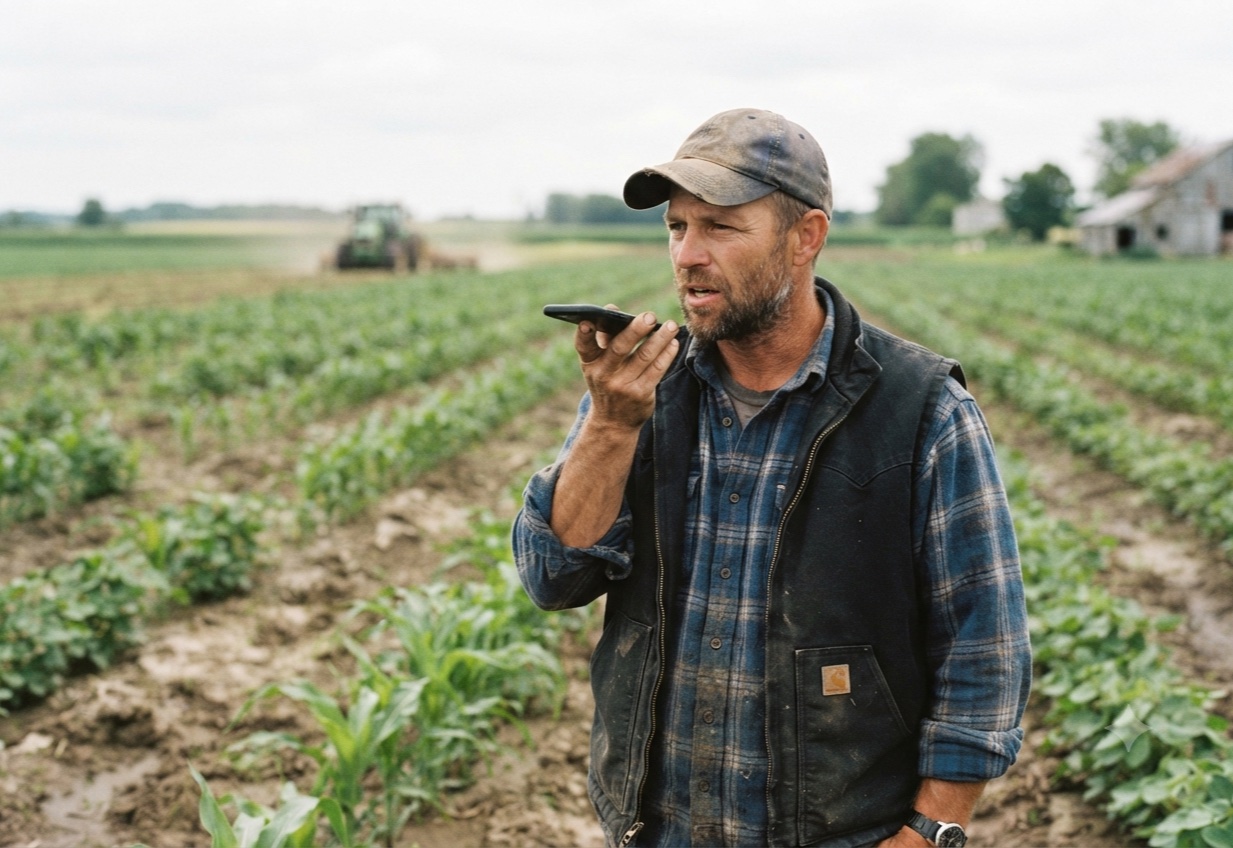
Numanac is a voice-based field data platform for farm operations: crews speak notes from the truck or the row, and the software turns that into structured, searchable records.
Your farm record says 18 gallons an acre. It doesn't say the north end was still too wet, so the crew started on the south side, or that the third tank foamed more than usual, or that somebody had to clear a nozzle twice. On the day, none of that seems worth writing down. Six months later, it might be the only explanation for a yield gap or a mixing problem.
Application and harvest records run billing, compliance, and traceability well. But they keep only the completed transaction, not what the operator noticed, what looked off, or why the plan changed. Field teams run into this information all day. What they've never had is a practical way to keep it.
Your field forms should not be fixed and unchangeable
Most farm management systems run on structured inputs: field, product, quantity, rate, date, acres. That structure makes data easy to compare, but it also decides in advance what's important to your specific operation. If an observation doesn't fit a field — or means stopping the machine, finding a screen, and typing a paragraph — it simply doesn't get entered. That's why legacy systems sit incomplete.
Fifteen-second input creates a different threshold
Voice lowers the bar for what's worth recording: an observation that would never justify opening a laptop justifies a fifteen-second note from the cab, in whatever words come naturally.
That opens up a layer of knowledge that has so far gone unrecorded: why a job slipped a day, which fix seemed to work, what to check on the next scout. Across a season, these observations add up to a running account of what people actually saw, decided, and learned on the ground.
You don't always know what will matter as a season progresses
A mention of leaf discoloration may mean nothing until the same mention from three fields shows up two weeks later as an early warning. A note that one block stayed wet longer than expected gets forgotten, until a yield gap months later makes it the missing piece.
Capturing only what today's workflow requires isn't enough, because a field observation's value isn't limited to the question being asked when it's recorded. With it, next year you can ask questions you didn't know to ask this year.
Exactly what you say, summarized for real agricultural intelligence
Collecting this much narrative used to require someone to listen to all of it and decide what mattered. That's no longer the constraint. A spoken note can be instantly transcribed, attributed to the person, field, and job, summarized, and turned into structured data — all while preserving the original sentence as reference.
Farm intelligence is built every single season
An operation that captures field observations consistently builds a living memory — conditions, exceptions, decisions, and outcomes — available long after the people involved have moved on. There's no going back to collect last season's observations.
This is the information Numanac is built to help collect: the people closest to the field say what they see, in their own words, without stopping work. Operations that start logging this season will have a year of field context by next season. The ones that wait will have the same records they have today.
The most consequential signal in a season often starts with a simple sentence.