
For decades, "AI for agriculture" has meant dashboards that no one in the field has time to open.
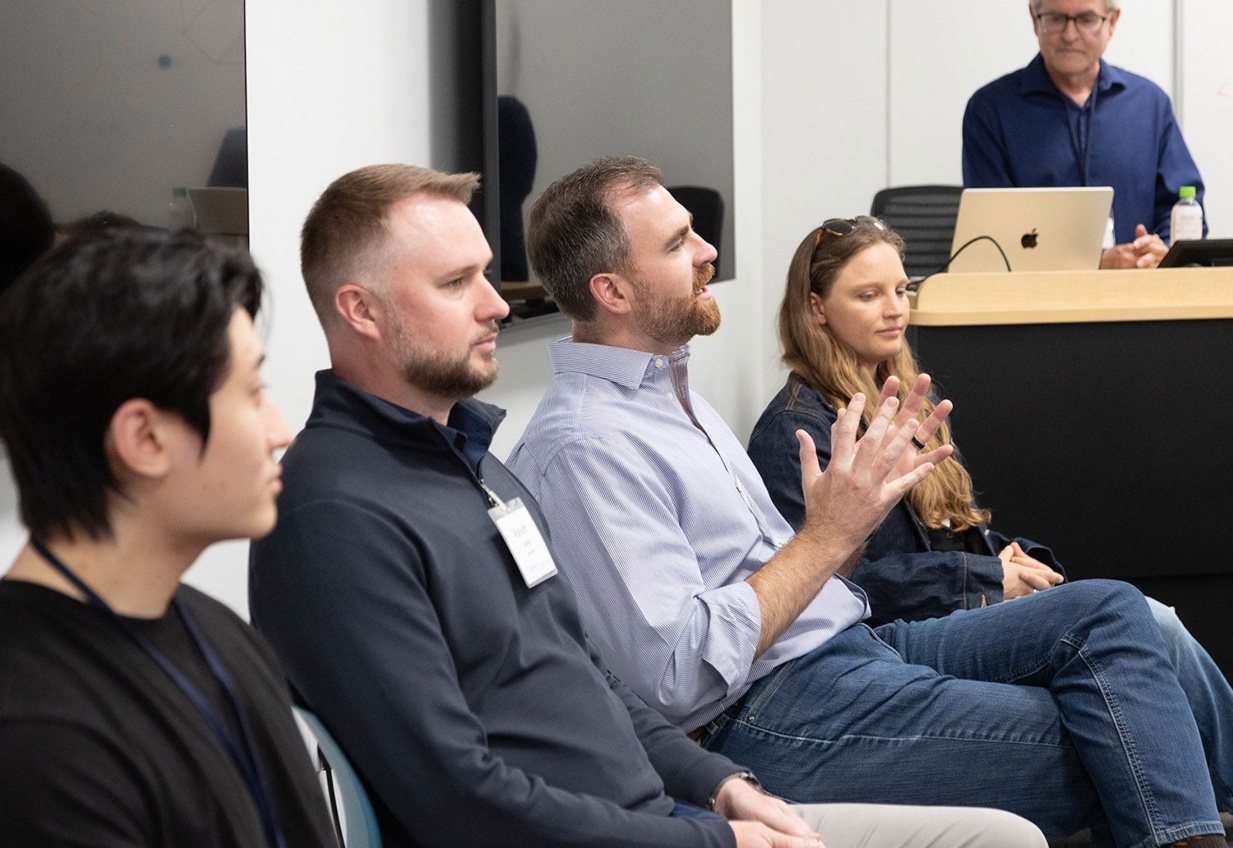
In May I represented Numanac with Kaleb Barker and Eric Ferguson at the AIFS x Meta Wearables AI AgTech Hackathon. I joined the opening panel and mentored student teams working on that exact problem: bringing the technology to the people doing the work, instead of asking them to walk back to it.
The weekend
The hackathon ran May 15 to 17, 2026, at UC Davis. It was hosted by the AI Institute for Next Generation Food Systems (AIFS), a UC Davis-led institute supported by USDA-NIFA and the National Science Foundation, with Meta providing its AI glasses. Forty-five students on six teams had a 36-hour build window to make a working app for a real problem in food and agriculture (AIFS recap).
It started Friday morning with a roundtable of growers, startup founders, and researchers. State Senator Christopher Cabaldon opened the weekend with a sharp take on what AI and wearables could mean for California agriculture. The conversations carried into the public panel and the hackathon kickoff, so students went into the build with real-world context.
The winner
The winning team, MetaBud, captured the core insight. A worker looks at a problem and says "capture this." The glasses log the image, the voice note, and the surrounding context, then triage the issue and route it to the right person. Hands-free, from start to finish.
MetaBud still ends in a dashboard. But the dashboard is for the manager, and it fills itself. The worker never has to open it.
The team put their goal plainly: "We don't want the AI to do the job itself. We want the people to do that job quicker and better."
It was a close field. All six teams built functional apps on the glasses, and the judges had difficult decisions to make. MetaBud was built by Lekhit Borole, Hritik Choudhery, Michael Gunning, Sarvesh Halbe, Yosef Meziad, Abigail Wong, and Ellie Yoshikawa.
Built for the field as it is
MetaBud resonated because it is the same problem we work on every day at Numanac. Out there:
- Hands are never free
- Connectivity is spotty
- The workforce is multilingual
- The calls that matter get made between the rows, not at a laptop
The teams that built for that messy reality, rather than designing around it, were the ones that stood out. The podium shows it. MetaBud went hands-free. Second place, CropCall AI, handled pest and incident reports in English and Spanish. Third place, MIRA, identified crop disease offline for remote fields (AIFS recap).
Closer than it looks
After a weekend with these students, I'm more convinced than ever that this is arriving faster than most people think. They went from an idea to a working prototype on the glasses in 36 hours.
The opening panel's central message was simple: technology is most powerful when it helps people do their jobs better, not when it tries to replace them. The winning team said the same thing in their own words. That is how we build at Numanac. What's said in the field should become the record an operation runs on, without anyone stopping work to type it.
It's the future we're already building, and this weekend was a good reminder of how close it is.
Thanks
My thanks to Darren Touch at Meta for making the weekend possible, and to the UC Davis AIFS team: director Ilias Tagkopoulos, Steve Brown, Samir Townsley, Kristin Singhasemanon, Ivor Martin do Prado, and the rest of the AIFS staff. Thanks as well to our fellow panelists, mentors, and judges.
And to the students who showed up and built.
FAQ
What was the AIFS x Meta Wearables AI AgTech Hackathon?
A three-day student hackathon at UC Davis, May 15 to 17, 2026, hosted by the AI Institute for Next Generation Food Systems with Meta. Forty-five students on six teams built working apps on Meta AI glasses to solve real problems in food and agriculture.
Who won?
MetaBud took first place with a hands-free reporting tool on Meta AI glasses. CropCall AI placed second with bilingual pest and incident reporting. MIRA placed third with offline crop disease identification.
Why do wearables matter for agriculture?
Field work rarely leaves hands free, signal is unreliable, and crews are often multilingual. Wearables and voice let workers capture what they see without stopping the work.
What does Numanac do?
Numanac is a voice-first platform for capturing agricultural field context. It turns what agronomists, growers, and field crews say into structured records, reports, and recommendations.